• Arts & Sciences
  • Washington University in St. Louis

Search form

Home

Department of Earth and Planetary Sciences

Main Menu

  • People
  • Undergraduate
  • Graduate
  • Courses
  • Research
  • Resources
  • Events

You are here

Home / People / Robert E. Criss

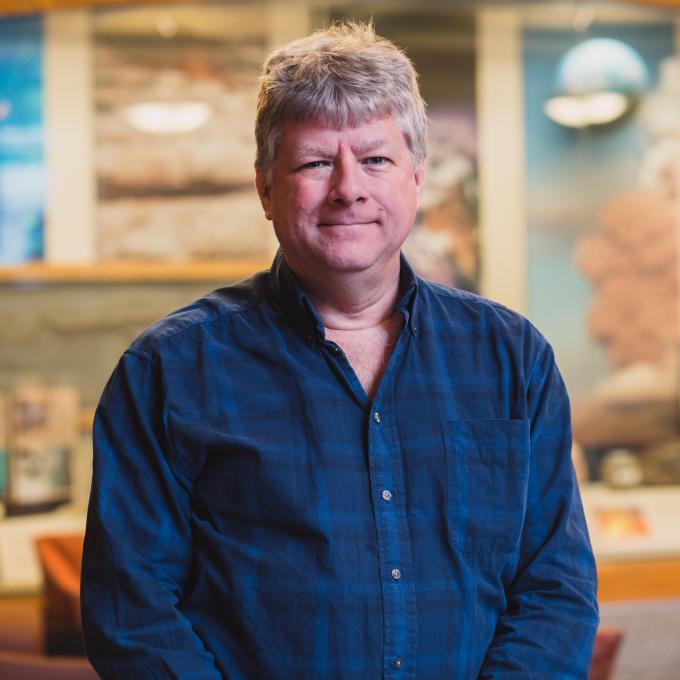
Robert E. Criss

Robert E. Criss

Professor
Degrees: 
Ph.D., California Institute of Technology, 1981
CV: 
Complete Publication List
E-mail: 
criss@levee.wustl.edu
Phone: 
314-935-7441
Fax: 
314-935-7361
Office: 
Rudolph, Room 256
Mailbox: 

Washington University
Campus Box 1169
1 Brookings Dr
Saint Louis MO 63130-4899

Website: 
Stable Isotope Laboratory

Research Interests

Stable Isotope Geochemistry

Stable isotopes provide a powerful probe into the origin of rocks and natural waters. Professor Criss' research features the use of isotopic tracing and imaging techniques to investigate the transport of aqueous fluids in environments that vary from rivers and cool potable groundwater systems essential to mankind, to deeper and hotter hydrothermal systems associated with granitic batholiths, stratovolcanoes, and ore deposits. The results may be combined with physical, chemical, geologic or petrographic data to deduce numerous aspects about the origin of waters and the processes that subsequently affect them.

A major focus for Criss and his associates is the origin, character and behavior of river and flood waters in the Mississippi, Missouri, and Meramec River basins. In the 1990's, the midcontinent has experienced floods of such severity that they would not, under normal circumstances, be expected to have all occurred in a period less that several centuries. Criss and Everett Shock have proven that engineering modifications of waterways have increased the frequency and severity of floods on most midwestern rivers. Criss and his former students Bill Winston and Chris Frederickson have developed an extensive isotopic and chemical data base and a new technique to quantify the time scales of groundwater transport to rivers. Winston and Criss have exploited our large database and extensive network of precipitation stations to identify the water sources in the fatal flash flood of May 2000, when 15 inches of rain fell in a 13 hour period. Criss, Lee Davisson (LLNL) and Jim Kopp (St. Louis Water Division) have developed a new geochemical technique that may be used to define the source regions of individual solutes in the Missouri River basin.

Criss and his associates are continuing to study shallow groundwater systems. Recent papers document the utility of oxygen isotopes in tracing the source of springs to regions as disparate as snowpacks in volcanic terranes to leaky lakes constructed on karst. Winston, Shock and Criss are extending our new hydrograph theory to explain chemical hydrographs, or "chemographs", representing the variations in chemical concentrations in rivers and springs. Davisson and Criss are using stable isotope and radiocarbon variations to delineate groundwater resources in the Central Valley of California, and have documented that intense pumping and agricultural irrigation practices caused the progressive replacement of pristine ancient groundwater by contaminated, nitrate-fertilized irrigation water. This situation has already rendered enormous volumes of groundwater to an unpotable condition and seriously threatens the water supply of the Central Valley.

Criss and his associates are also investigating modern and fossil hydrothermal systems that develop beneath stratovolcanoes. Isotopic exchange between fractured volcanic rocks and meteoric hydrothermal systems imprints a record of the fluid flow patterns in the oxygen isotope ratios of rocks. Utilizing oxygen isotope analyses on a 3-D network of more than 900 surface and underground rock samples collected throughout the Comstock Lode district, Criss and graduate student Mike Singleton (Washington University, PhD 2002) have constructed the first 3-D computer images and stereopairs of isotopic patterns. These isotopic images have elucidated the geometry of fluid flow during ore deposition, the relation of faults to the hydrothermal system, and the timing of igneous and structural events in the district relative to the deposition of ore. Criss and Singleton have used these 3-D isotope mapping techniques to image the convective hydrothermal gyres that deposited the fabulous concentration of silver and gold known as the "Big Bonanza" beneath a stratovolcano along the Comstock Lode, Nevada, more than 13 million years ago. The regional pattern of hydrothermal alteration in the Comstock district is analogous to the pattern developed beneath the Quaternary Brokeoff volcano in Lassen Volcanic National Park, studied by Criss and his former student Tim Rose (LLNL).

Other ongoing investigations focus on fluids in diverse geologic environments. Field projects include the deep metamorphic-hydrothermal system in the Idaho batholith and the Coeur d'Alene mining district (with R.J. Fleck, USGS and former student G.F. Eaton, LLNL), and of tectonically-expelled formation fluids in the California Coast Ranges (with Davisson and former student E.B. Melchiorre, DePauw University). The latter study documents a close association between fluid overpressures and a reduction in seismicity, demonstrating that fluids promote aseismic deformation mechanisms over brittle failure, contrary to current paradigms of earthquake generation. Melchiorre is also investigating isotopic relationships in copper carbonates, which are rapidly replacing sulfides as the world's major source of copper metal. His results prove that these minerals form at low temperatures in equilibrium with soil waters, commonly by bacterial deposition, except for those associated with massive sulfide deposits undergoing exothermic oxidation. Theoretical investigations of isotopic fractionation and disequilibrium phenomena are continuing.

Books

Criss R. E. (1999) Principles of Stable Isotope Distribution, Oxford University Press, New York, 264 p. [QD466.5C1C75] ( Errata )

Criss, R.E. and Wilson, D.A., editors (2003) At the Confluence: Rivers, Floods, and Water Quality in the St. Louis Region, MBG Press, St. Louis, 278 p.

Recent Publications

Criss, R.E., and Criss, E.M. (2012) Prediction of well levels in the alluvial aquifer along the lower Missouri River. Ground Water (in press, published online 28 Oct 2011).DOI: 10.1111/j.1745-6584.2011.00877.

Hofmeister, A.M and Criss, R.E. (2012) A thermodynamic and mechanical model for formation of the Solar System via 3-dimensional collapse of the dusty pre-solar nebula. Planetary and Space Science (in press).

Criss, R.E. (2011) Same Approach, Worse Result. Emergency Management Magazine, July/August 2011, p. 10.

Criss, R.E. (2010) A Darcian model for the flow of Big Spring and the head in the Ozark aquifer, Missouri USA. Acta Carsologica, Special Issue on Karst Hydrology, v. 39/2, p. 379-387.

Lippmann, J.L., Criss, R.E. and Osburn, G.R. (2010), Reworked loess and red clays in Missouri caves: a comparative compositional study. Missouri Speleology, 50 #2-3, p. 10-20.

Criss, R.E., Osburn, G.R., and House, R. Scott (2009) The Ozark Plateaus: Missouri, in Caves and Karst of the USA, Palmer, A.N. and Palmer M.V., eds., National Speleological Society, Huntsville AL, p. 156-170.

Criss, R.E., (2009) Increased flooding of large and small watersheds of the central USA and the consequences for flood frequency predictions, in Criss RE and Kusky TM, eds, Finding the Balance between Floods, Flood Protection, and River Navigation, Saint Louis University, Center for Environmental Sciences, p. 16-21. URL: http://www.ces.slu.edu

Criss, R.E. and Winston, W.E. (2008) Discharge predictions of a rainfall-driven theoretical hydrograph compared to common models and observed data. Water Resources Research, 44, W10407, doi:10.1029/2007WR006415.

Criss, R.E., and Winston, W.E., (2008) Do Nash values have value? Discussion and alternate proposals. Hydrologic Processes, 22, p. 2723-2725, (doi:10.1002/hyp.7072).

Complete Publications List

Courses

Topics in the Geosciences - Speleology | Human Use of the Earth | Hydrology | Introduction to Geochemistry | Stable Isotope Geochemistry |

Teaching Faculty
  • Directory
  • Faculty
    • Affiliated Faculty
    • Physics Department Colleagues
    • Emeritus Faculty
  • Research Scientists
  • Teaching Staff
  • Administrative Staff
  • Research Staff
  • Graduate Students
  • Other Administrative Staff
  • Alumni
  • Laboratory Directory
  • News
  • E&PS Library
  • NASA PDS Geosciences Node
  • McDonnell Center for the Space Sciences
  • GIS
  • Contact Us
  • Site Map

Department of Earth and Planetary Sciences | Washington University in St. Louis | Campus Box 1169 | One Brookings Drive, St. Louis, MO 63130-4899 | webmaster@levee.wustl.edu